
Category
AAC ( Communication) Strategies

All Core and No Fringe Vocabulary Makes for Dull Communication
Core words get a lot of emphasis in AAC learning. What is fringe vocabulary and why is it important? Read on to…

Language Learning: A Lot can Happen With Scaffolding
Modelling has been a widely used strategy to support emergent AAC learners. Read on to know how scaffolding conversations in addition to…
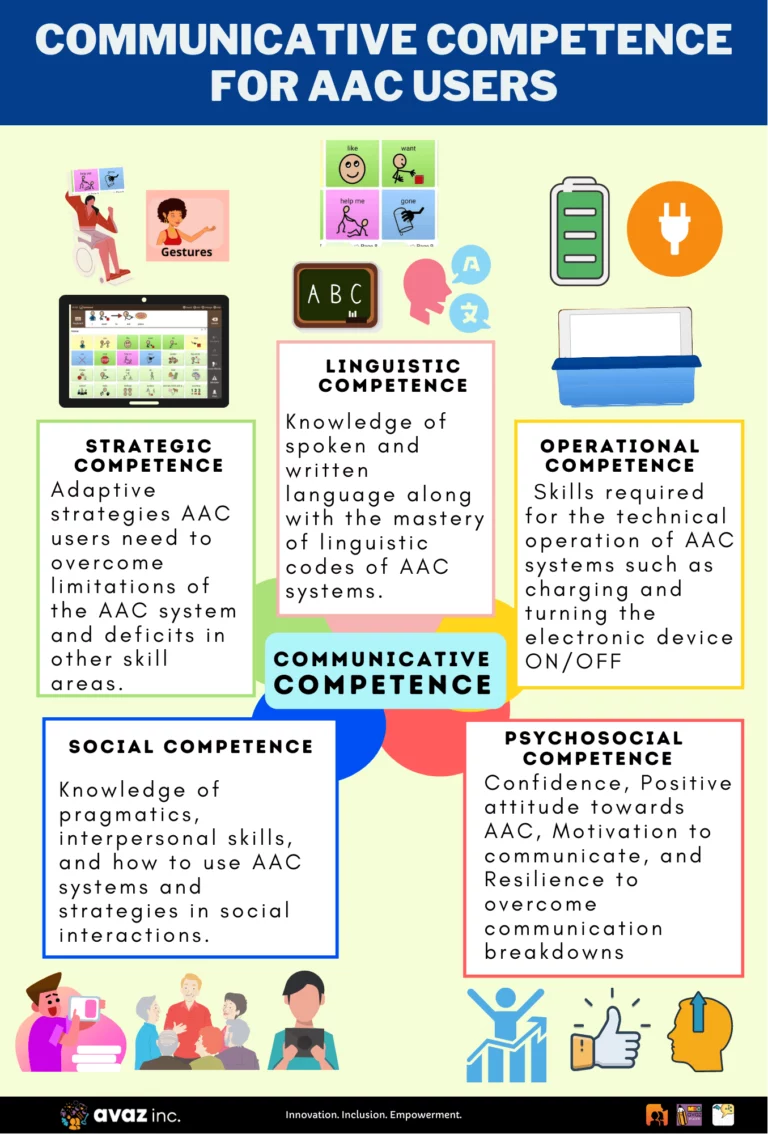
Understanding Communicative Competence for AAC Users
For AAC users to communicate autonomously, they need to achieve proficiency in skills that enable them to freely express themselves. However, this…
Building Language for All Communicative Purposes – Requesting and Emotions
In the previous two blogs we've been learning about communicative purposes/functions such as rejecting and commenting as well as Greetings and Questions.…
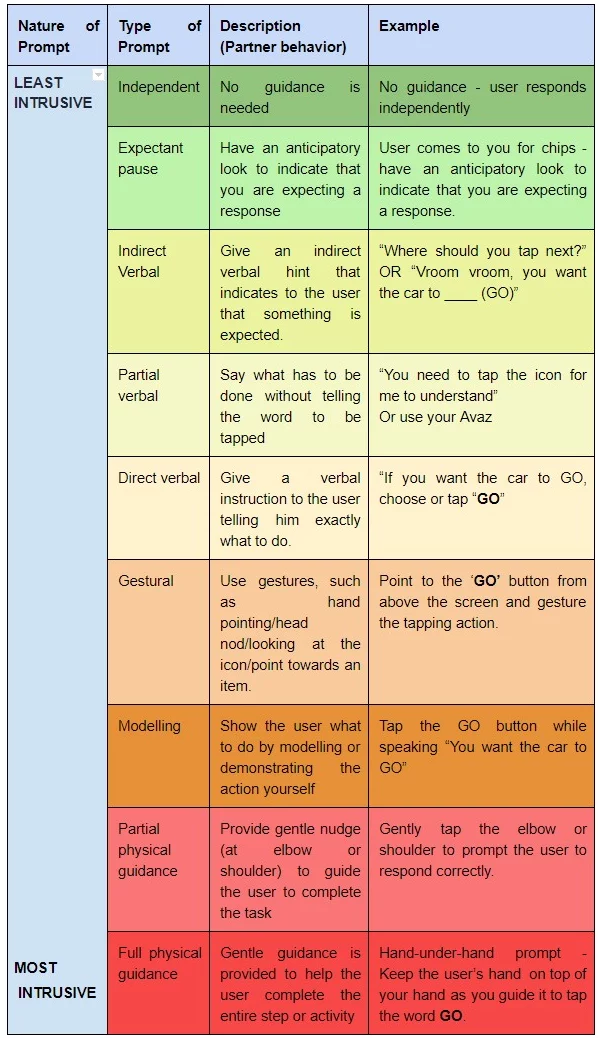
Understanding Prompting Hierarchy
Any new learning can be quite overwhelming for the user. New users can benefit from prompting, regardless of age, communication skills, or…
Ideas and Tips to motivate communication
Communicative temptations involves setting up the environment, so as to create a need to force the user to communicate. A child is…
All about Communicative Temptations
Communicative temptations involves setting up the environment, so as to create a need to force them to communicate. A child is much…
Why is Core Vocabulary Important For an AAC User?
Core words are the small number of words that are used most frequently in our conversations. About 80% of the words we…
AAC Apps for Adults with Acquired Communication Disorders
A brain injury or neurological disorder can rob an adult of vital communication skills. Communication and Speech therapy can enable them to…
Aided Language Stimulation (Modelling) Strategies in AAC
Why are cooking/exercise videos so popular? Because most of us prefer watching how a pie is made or how to do a…